To my one and only apparent non-family/friend reader, thanks again!
It's nice to know that I'm not talking/writing to the air.
Carrying on...
Monday, August 24, 2009
Hornworms! Run!
Moseying about my thus far unsuccessfully fruiting poblano/ancho pepper plants yesterday I encountered a nasty:
 (reference to my hand)
 (reference to my pinky)
I had noted that my poblano pepper had yet to set fruit and seemed to appear gnawed upon. I suspected that it was obviously some bug that liked to chew had been at it and I ins response have been diligently spraying my plant down with dilute neem oil.
Little did I expect to see this guy and miss him at this SIZE.
This is a tobacco hornworm (http://en.wikipedia.org/wiki/Hornworm), a little different from the regular tomato hornworm but still happy to munch on all in the Solanaceae family(aka nightshade family such as eggplant, peppers, tomatoes).
I pulled him off to take pictures and I KNOW I am supposed to smoosh'em but I have difficulties with that, so in deference to nature I tried feeding it to the praying mantis, but she wasn't having it. Maybe she's on a diet... or maybe the fact that the hornworm was possibly 2x her size could have been the reason or maybe hornworms are unusual and unpalatable to mantises, which seems reasonable.
So I tried feeding it to the golden orb spider, but yeah, hornworm was too heavy and that just left a nice hole in the web when I attempted to chuck it in. Sorry to mess the place up ma'am. After exiting the spider web the hornworm fell into the bushes where I couldn't find it but far enough away from its regular buffet, so I think it'll just die.
Unfortunately, when there's one hornworm there's always plenty more and sure enough I found about 3 more munching away including a swallow tail butterfly caterpillar going away at the parsnips (I know the 'snips should have been pulled up WAY before now, they may be 3 months overdue... I'm just worried that they'll be woody and bitter if I pull up now before a frost or if I can freeze them to get to them sweet, or do I have to really boil?)
Anyways, since I couldn't get anything to eat them, and feel weird about smooshing them, so I throw them VERY FAR AWAY into the park, and hope that it's too far for them to make it back or that the bouncing off the ground gets them. I wonder if birds like them and I can put them in a bottle of sorts for the birds to pick them out.... that would be sort of neat.
I understand that I can Bt (Bacillus thuringiensis ) (http://en.wikipedia.org/wiki/Bacillus_thuringiensis) the worms (caterpillars) but it's not a big deal to do so unless there's a real infestation. Plus, I want to keep things on the cheap too. So unless the worms want to see me really angry like the Hulk, we'll keep it mostly civil here.
Randomly, I have heard murmurings online that hornworms are edible. A little olive oil and frying some say. Hmm... maybe if I need to be a survivalist that's good to know.
Other than that... here's looking at you kid.

 (reference to my hand)
 (reference to my pinky)
I had noted that my poblano pepper had yet to set fruit and seemed to appear gnawed upon. I suspected that it was obviously some bug that liked to chew had been at it and I ins response have been diligently spraying my plant down with dilute neem oil.
Little did I expect to see this guy and miss him at this SIZE.
This is a tobacco hornworm (http://en.wikipedia.org/wiki/Hornworm), a little different from the regular tomato hornworm but still happy to munch on all in the Solanaceae family(aka nightshade family such as eggplant, peppers, tomatoes).
I pulled him off to take pictures and I KNOW I am supposed to smoosh'em but I have difficulties with that, so in deference to nature I tried feeding it to the praying mantis, but she wasn't having it. Maybe she's on a diet... or maybe the fact that the hornworm was possibly 2x her size could have been the reason or maybe hornworms are unusual and unpalatable to mantises, which seems reasonable.
So I tried feeding it to the golden orb spider, but yeah, hornworm was too heavy and that just left a nice hole in the web when I attempted to chuck it in. Sorry to mess the place up ma'am. After exiting the spider web the hornworm fell into the bushes where I couldn't find it but far enough away from its regular buffet, so I think it'll just die.
Unfortunately, when there's one hornworm there's always plenty more and sure enough I found about 3 more munching away including a swallow tail butterfly caterpillar going away at the parsnips (I know the 'snips should have been pulled up WAY before now, they may be 3 months overdue... I'm just worried that they'll be woody and bitter if I pull up now before a frost or if I can freeze them to get to them sweet, or do I have to really boil?)
Anyways, since I couldn't get anything to eat them, and feel weird about smooshing them, so I throw them VERY FAR AWAY into the park, and hope that it's too far for them to make it back or that the bouncing off the ground gets them. I wonder if birds like them and I can put them in a bottle of sorts for the birds to pick them out.... that would be sort of neat.
I understand that I can Bt (Bacillus thuringiensis ) (http://en.wikipedia.org/wiki/Bacillus_thuringiensis) the worms (caterpillars) but it's not a big deal to do so unless there's a real infestation. Plus, I want to keep things on the cheap too. So unless the worms want to see me really angry like the Hulk, we'll keep it mostly civil here.
Randomly, I have heard murmurings online that hornworms are edible. A little olive oil and frying some say. Hmm... maybe if I need to be a survivalist that's good to know.
Other than that... here's looking at you kid.

Sunday, August 23, 2009
Argiope aurantia
While walking near my large compost pile by the side of the house (where we place most of our leaves, grass clippings, and other lawn refuse as compared to the smaller bin for kitchen stuff and newspaper), I nearly ran into this beauty:

(Wow, that sounded Steve Irwin-y)
I'm not really squeamish about spiders, just a wee bit nervous about getting bitten, and my past knowledge has led me to believe that the smaller, less colorful innocuous ones are the ones you should worry about more (eg. brown recluse).
This particular spider was HUGE. It was web was at least 2 feet in diameter and was 2 inches from front leg to back leg tip.
Going under the assumption that this was a typical garden spider I easily came upon it on wikipedia: Argiope aurantia. Or simply a Golden Orb Weaver.
http://en.wikipedia.org/wiki/Argiope_aurantia
The dense zigzag in the middle of the web is hypothesized to be a stabilizer of sorts for the spider to reside in while it waits for its prey or it meant to hide the spider from flying insects.
Another cool thing is that it eats its web every morning potentially to recycle silk spinning materials and eat any tiny insects it might have missed for nutrition.
I want a house I can eat! (No gingerbread jokes now!)

Though pretty common, but it's not often to see such a large specimen. Down here (ok, for many people) it seems like the mindset is to destroy every spider and snake visible, which is a huge pity. I am proponent of creating a balanced ecosystem and once everyone is settled and happy I am hoping that everything will go as clockwork, be balanced and etc unless great catastrophic weather events screw things up, or I manage to over neem somehow.
Sadly this spider, noting its bright coloration and size means that it is a female and will die in the winter, but with luck it will leave some babies behind to manage my future aggravations.

(Wow, that sounded Steve Irwin-y)
I'm not really squeamish about spiders, just a wee bit nervous about getting bitten, and my past knowledge has led me to believe that the smaller, less colorful innocuous ones are the ones you should worry about more (eg. brown recluse).
This particular spider was HUGE. It was web was at least 2 feet in diameter and was 2 inches from front leg to back leg tip.
Going under the assumption that this was a typical garden spider I easily came upon it on wikipedia: Argiope aurantia. Or simply a Golden Orb Weaver.
http://en.wikipedia.org/wiki/Argiope_aurantia
The dense zigzag in the middle of the web is hypothesized to be a stabilizer of sorts for the spider to reside in while it waits for its prey or it meant to hide the spider from flying insects.
Another cool thing is that it eats its web every morning potentially to recycle silk spinning materials and eat any tiny insects it might have missed for nutrition.
I want a house I can eat! (No gingerbread jokes now!)

Though pretty common, but it's not often to see such a large specimen. Down here (ok, for many people) it seems like the mindset is to destroy every spider and snake visible, which is a huge pity. I am proponent of creating a balanced ecosystem and once everyone is settled and happy I am hoping that everything will go as clockwork, be balanced and etc unless great catastrophic weather events screw things up, or I manage to over neem somehow.
Sadly this spider, noting its bright coloration and size means that it is a female and will die in the winter, but with luck it will leave some babies behind to manage my future aggravations.
Saturday, August 22, 2009
Testing, testing...
So, just curious to see if anyone is really reading this... gaining any insights or whatnot allow me quote Pink Floyd:
"Hello? Is there anybody out there?"
Just checking. Thanks.
Real updates later tonight.
"Hello? Is there anybody out there?"
Just checking. Thanks.
Real updates later tonight.
Thursday, August 20, 2009
Critters and delicious stuff
Just a quick picture post about all the cool stuff outside my window:
 There's a praying mantis in this pic above that I didn't even notice until I loaded it!
 I love the color of the eyes of this dragonfly! For some reason, dragonflies are often called the "Devil's steed." I don't get it.
 the praying mantis again! Looks like she has a little design on her back.
 I thought this was funny. Mantis wants a sneak attack! Maybe i can get a great video of them fighting, you'd be amazed!
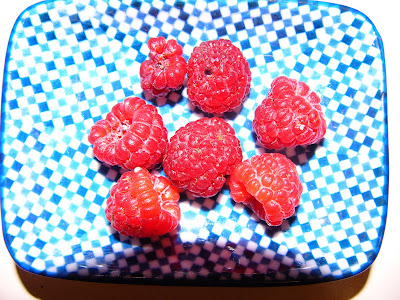 The few, delicious raspberries that survived from my overzealousness from last year, added to creme brulee!

Random tame deer that has been wandering our park and doesn't understand the concept of danger until it gets eaten by wild dogs.

 There's a praying mantis in this pic above that I didn't even notice until I loaded it!
 I love the color of the eyes of this dragonfly! For some reason, dragonflies are often called the "Devil's steed." I don't get it.
 the praying mantis again! Looks like she has a little design on her back.
 I thought this was funny. Mantis wants a sneak attack! Maybe i can get a great video of them fighting, you'd be amazed!
 The few, delicious raspberries that survived from my overzealousness from last year, added to creme brulee!
Random tame deer that has been wandering our park and doesn't understand the concept of danger until it gets eaten by wild dogs.

The seedlings! The seedlings!
No way! The seedlings are starting up!

All of them except the beetberry, but I'm not too worried because a) it's hasn't been that long since I planted them and b) it's known to take a notoriously long time to germinate
The kale, mustards and chards are no surprise to be making an appearance already with all of my diligent watering (for once) and the extra rain that's been going on. Oh, babies... so delicate, so much work... *sigh* just when I was appreciating my mature plants and all their fruit bearing-ness.
The trick now is to keep them nice and protected from EVERYTHING. Too much sun, critters, etc.
My plan, as I don't have any really thin floating row covers is to get some sticks, poke them in the ground and pop newspaper on top to shade them if needed, though the forecast is looking like it won't get to even the mid-90s, so perhaps it won't be necessary.
I might not even have to water at all for nearly a week if the forecast is correct, with rain next week too.
Less work=good (Hurrah!)
In terms of the critters, that's the tough stuff. I and REALLY gung-ho on critter prevention as I've had some ridiculous swallowtail butterfly caterpillar "infestations" and flea beetles and slugs lately, so alas, I have been spraying (gentle spraying) of neem oil dilution all around my plants as a notice for the bugs to "BACK AWAY."
I haven't been this excited about my plants coming up in a while. This fall, I just have some INTERESTING things planted, perennial vegetables such as mache, chard and beetberry and pretty japanese mustards and such have just gotten me super impatient to see them.
I can't wait until the bumper crop of tomatoes finish up so I can yank them and plant my other stuff:
 Here is a map of my plan for fall/what I currently have going on in the garden (click on pic to see the plans clearly, and note, this is definitely not to scale):


All of them except the beetberry, but I'm not too worried because a) it's hasn't been that long since I planted them and b) it's known to take a notoriously long time to germinate
The kale, mustards and chards are no surprise to be making an appearance already with all of my diligent watering (for once) and the extra rain that's been going on. Oh, babies... so delicate, so much work... *sigh* just when I was appreciating my mature plants and all their fruit bearing-ness.
The trick now is to keep them nice and protected from EVERYTHING. Too much sun, critters, etc.
My plan, as I don't have any really thin floating row covers is to get some sticks, poke them in the ground and pop newspaper on top to shade them if needed, though the forecast is looking like it won't get to even the mid-90s, so perhaps it won't be necessary.
I might not even have to water at all for nearly a week if the forecast is correct, with rain next week too.
Less work=good (Hurrah!)
In terms of the critters, that's the tough stuff. I and REALLY gung-ho on critter prevention as I've had some ridiculous swallowtail butterfly caterpillar "infestations" and flea beetles and slugs lately, so alas, I have been spraying (gentle spraying) of neem oil dilution all around my plants as a notice for the bugs to "BACK AWAY."
I haven't been this excited about my plants coming up in a while. This fall, I just have some INTERESTING things planted, perennial vegetables such as mache, chard and beetberry and pretty japanese mustards and such have just gotten me super impatient to see them.
I can't wait until the bumper crop of tomatoes finish up so I can yank them and plant my other stuff:
 Here is a map of my plan for fall/what I currently have going on in the garden (click on pic to see the plans clearly, and note, this is definitely not to scale):
Tuesday, August 18, 2009
Birds and the bees...
This post is sort of a self congratulatory pat on my back, not entirely out of ego, but because I am thrilled to have attracted so much cool stuff to my garden: birds, squirrels/chipmunks (not always good to have around, but fun to watch and entertain the dog with), various bees, hummingbirds, assassin bugs, praying mantises, tree frogs, toads and even snakes are all cool!
Most of the work done to attract all of this wildlife was through happenstance and some actual hard work on my end (do you have any idea how many toads I carried back to my garden?)

Quite a few of the birds that have flocked to my garden (which reminds me, I need to built birdhouses for) came due to prodigious amounts of seed I left out which also attracted squirrels/chipmunks (unfortunately who were then attracted to my attic... another story for another time). The birds have further stayed and produced bird babies all around who feed their way on an accidental wild woodland strawberry groundcover I acquired from a plant trading section. I didn't even know I picked up some of the plant, but it covers nearly all of a helpful location i was tired of mulching.
Forgotten overturned pots and large flat rocks provided safe spots and nooks and crannies for toads who have in turn attracted snake(s) who hopefully will rid me of some chipmunks :)
The chipmunks too have been helpful though by planting all these sunflower seeds that had been for the birds and I always have a sunflower somewhere, which makes MORE sunflowers to attract the seed eaters.

Even my accidental spots of standing water, terrible mosquito breeding grounds I know, but the dragonflies near the lake have popped on by to make themselves at home here too.
It's all pretty remarkable and makes you want to sing the "Circle of Life," huh?
Actually that might be a little too saccharin even for me and that was my college graduation song. Made me feel like I was preparing to get eaten by a lion. Thanks for preparing me for life Purdue!
All in all, this is just a post about me blathering on about how happy I am that I'm not the only one enjoying my garden. Now if only I could make the squash vine borers not enjoy it.
Most of the work done to attract all of this wildlife was through happenstance and some actual hard work on my end (do you have any idea how many toads I carried back to my garden?)

Quite a few of the birds that have flocked to my garden (which reminds me, I need to built birdhouses for) came due to prodigious amounts of seed I left out which also attracted squirrels/chipmunks (unfortunately who were then attracted to my attic... another story for another time). The birds have further stayed and produced bird babies all around who feed their way on an accidental wild woodland strawberry groundcover I acquired from a plant trading section. I didn't even know I picked up some of the plant, but it covers nearly all of a helpful location i was tired of mulching.
Forgotten overturned pots and large flat rocks provided safe spots and nooks and crannies for toads who have in turn attracted snake(s) who hopefully will rid me of some chipmunks :)
The chipmunks too have been helpful though by planting all these sunflower seeds that had been for the birds and I always have a sunflower somewhere, which makes MORE sunflowers to attract the seed eaters.

Even my accidental spots of standing water, terrible mosquito breeding grounds I know, but the dragonflies near the lake have popped on by to make themselves at home here too.
It's all pretty remarkable and makes you want to sing the "Circle of Life," huh?
Actually that might be a little too saccharin even for me and that was my college graduation song. Made me feel like I was preparing to get eaten by a lion. Thanks for preparing me for life Purdue!
All in all, this is just a post about me blathering on about how happy I am that I'm not the only one enjoying my garden. Now if only I could make the squash vine borers not enjoy it.
0
comments
 Labels:
assassin bugs,
bees,
birds,
chipmunks,
dragonflies,
forgs,
happy,
hummingbirds,
luck,
no badgers,
praying mantises,
snakes,
squirrels,
sunflowers,
toads
Labels:
assassin bugs,
bees,
birds,
chipmunks,
dragonflies,
forgs,
happy,
hummingbirds,
luck,
no badgers,
praying mantises,
snakes,
squirrels,
sunflowers,
toads
Labels:
assassin bugs,
bees,
birds,
chipmunks,
dragonflies,
forgs,
happy,
hummingbirds,
luck,
no badgers,
praying mantises,
snakes,
squirrels,
sunflowers,
toads
Monday, August 17, 2009
As usual, the mosquitoes: Canna Leaves vs Sweet grass vs incense
In my usual quest to try to fend off mosquitoes or at least me the heck alone when I am in the garden without harsh chemicals or lots of heavy clothing in 90+ degree weather, I have taken to burnage.
Allow me to specify: At my recent visit to Whole Foods where I got neem oil, the apothecary-like lady suggested incense (which I do have and had to confirm that it was all natural and not artificial fragrance laden) and that made me then think of Sweetgrass, which I inquired to her if Whole Foods sold, and they did, but it seemed rather expensive, ~$8 a packet of 20 incense wands.
The incense thing reminded me of my prior research about cannas and how they supposedly are insecticidal when burnt, and I figured as I had leaf rollers I could potentially kill two bugs with one stone here.
So I am forgoing the sweetgrass for now, rather interested in growing it as it would be potentially cheaper and in the meantime will try the incense I have on hand and canna leaves (I wonder how they smell... will update on that when it happens).
(NOTE: it's a little aggravating and dubious about the burning cannas being an insecticidal thing as all I can seem to find are sites stating, "...said to be an insecticidal when burnt..." and nothing else. I suppose as long as it doesn't kill me it's worth a try though I start a little when my husband asks, "Is the smoke safe for you?")
For the incense and cannas I'll probably just have 4 large tin cans filled with sand near each corner of the yard to hold incense or canna leaves in and allow the wind to swirl it all about. Hopefully with luck no ash will catch the grass on fire as we don't water it.
Naturally I wouldn't want to not add some interesting facts or research in here somewhere, so here I go:
Sweetgrass is considered to be potentially one of the oldest living things still alive on earth today as it is grown primarily via rhizomes rather than the seeds, so one plant may extend many miles from its original parent.
It has been used by the native Americans for healing and ritual purposes as well as an insecticide and is thought to be mildly psychotrophic due to its potential to be a soporific when burned, possibly in part of the chemical coumarin within.
Medieval Europeans would use sweetgrass as the rushes on floors or in sick rooms because of the sweet vanilla-like scent it gave off when it was trod upon.
Latin name and more interesting history via Wikipedia:
http://en.wikipedia.org/wiki/Hierochloe_odorata
This is a very interesting link about a commercial place obsessed with sweetgrass and are pretty scientific about it all:
http://www.ecoseeds.com/sweetgrass.html
I am somewhat rethinking growing it because I think the conditions here would not be conducive and it seems to be more temperamental of plant than I'd like to deal with rather than the hardy plains grass I thought it to be.
If anything about this site, I am highly impressed (and amused) that they trademarked the name, SUPERSHAMANISTIC (!) for one of their vigorous varieties.
Allow me to specify: At my recent visit to Whole Foods where I got neem oil, the apothecary-like lady suggested incense (which I do have and had to confirm that it was all natural and not artificial fragrance laden) and that made me then think of Sweetgrass, which I inquired to her if Whole Foods sold, and they did, but it seemed rather expensive, ~$8 a packet of 20 incense wands.
The incense thing reminded me of my prior research about cannas and how they supposedly are insecticidal when burnt, and I figured as I had leaf rollers I could potentially kill two bugs with one stone here.
So I am forgoing the sweetgrass for now, rather interested in growing it as it would be potentially cheaper and in the meantime will try the incense I have on hand and canna leaves (I wonder how they smell... will update on that when it happens).
(NOTE: it's a little aggravating and dubious about the burning cannas being an insecticidal thing as all I can seem to find are sites stating, "...said to be an insecticidal when burnt..." and nothing else. I suppose as long as it doesn't kill me it's worth a try though I start a little when my husband asks, "Is the smoke safe for you?")
For the incense and cannas I'll probably just have 4 large tin cans filled with sand near each corner of the yard to hold incense or canna leaves in and allow the wind to swirl it all about. Hopefully with luck no ash will catch the grass on fire as we don't water it.
Naturally I wouldn't want to not add some interesting facts or research in here somewhere, so here I go:
Sweetgrass is considered to be potentially one of the oldest living things still alive on earth today as it is grown primarily via rhizomes rather than the seeds, so one plant may extend many miles from its original parent.
It has been used by the native Americans for healing and ritual purposes as well as an insecticide and is thought to be mildly psychotrophic due to its potential to be a soporific when burned, possibly in part of the chemical coumarin within.
Medieval Europeans would use sweetgrass as the rushes on floors or in sick rooms because of the sweet vanilla-like scent it gave off when it was trod upon.
Latin name and more interesting history via Wikipedia:
http://en.wikipedia.org/wiki/Hierochloe_odorata
This is a very interesting link about a commercial place obsessed with sweetgrass and are pretty scientific about it all:
http://www.ecoseeds.com/sweetgrass.html
I am somewhat rethinking growing it because I think the conditions here would not be conducive and it seems to be more temperamental of plant than I'd like to deal with rather than the hardy plains grass I thought it to be.
If anything about this site, I am highly impressed (and amused) that they trademarked the name, SUPERSHAMANISTIC (!) for one of their vigorous varieties.
Saturday, August 15, 2009
Fall/Winter gardening plans
It's August and flippin' hot.
My husband keeps saying, "It's almost fall! It's almost fall!" and I sort of look at him and say, "There's plenty of summer here, baby." After all, it's Tennessee and the temperatures are pretty warm even into October.
Last I remembered at least.
Despite the current and predictable early fall heat, I am pumped about fall gardening, to the point that I almost wish my tomatoes would be DONE already so I can get some peas back into the ground and be able to sit back again and not have to pamper anything in my garden like heat lovers force me to do.
Plus I've always found peas (sugar, snow and English) satisfying in their yields and I can eat their tips. Tomatoes mean only fruit eatin'.
This reminds me of my most likely unsuccessful attempt at sweet potato growing, as I got lazy/poor in getting proper soil/amendments to pile up in the large bucket I was growing them in. As long as I can get a few I'll be pleased and maybe I can still pile up some dirt at this point? Either way, what I was getting at is that sweet potato leaves and tips can be eaten too, like a tastier spinach (aren't other greens, nearly always?)
Multipurpose vegetables=good
But back to cool weather gardening (unfortunately having to be started in !@$#@ hot weather).
My plan is completely tear down the bean and cuke trellises by September, all the tomatoes by the then or mid-Sept. and plant various peas in their places. I like using bush-type/no-support needing peas too to delineate between my beds of parsnips, turnips and carrots (well, those are good delineators too).
I will be planting lucullus chard, sold at my local mom n' pop, Russell's, and nearby I will plant Perpetual Chard, a chard that I got from Territorial Seed (http://www.territorialseed.com/product/1129/s). It is apparently bolt resistant and can eventually perennialize in zones 7 up. Exciting as I like not having to mess with parts of my garden more than usual because it's plenty of work already!
I am also devoting one of the smaller beds to blue and red kales with mache/corn salad on the the far sides of the bed. Mache is described as being so tender it will melt in your mouth, so THAT sounds delish (from Botanical Interests: http://www.botanicalinterests.com/store/search_results_detail.php?seedtype=V&seedid=436). Mache supposedly is a perennial too, and with it being on each end of the bed, it can fill itself in if it likes or I can just pull the middle annuals out if I like. I understand that I could potentially let the kale's self seed, but in the summer, kale's not that great and slightly bitter and got super bug-ttacked.
Finally, another small bed is being devoted to Strawberry Spinach/Beetberry (http://www.territorialseed.com/product/975/s) which I hope germinates well and will perennialize too as it's a pretty cool looking plant and "very European." Oh I feel so debonair saying that ;) I purchased this as well from Territorial seed.
If all goes well in my garden I should be building up the perennials (maybe even malabar spinach will continue to love me next year with enough mulching to keep it warm until spring!) and then I can stop with the whole hard work thing! (ha ha.)
(I'd also like to grow Tom Thumb buttercrunch lettuce (http://www.territorialseed.com/product/897/s): because it sounds so darn cute, but I'm the only salad eater here :(
This fall (true fall when it's consistently below 80 degrees, hope), with the assumption that all my fall vegetable planting is done I will be working on prettifying the garden so that not only does it look tidy and full of vegetables, but will have flowers year round (if I plan this correctly) to keep the pollinators here and always busy.
Now if I can just get a hold of some butterfly plants to stop the swallowtail butterfly caterpillars from decimating my parsley/cilantro that'll be nice.
My husband keeps saying, "It's almost fall! It's almost fall!" and I sort of look at him and say, "There's plenty of summer here, baby." After all, it's Tennessee and the temperatures are pretty warm even into October.
Last I remembered at least.
Despite the current and predictable early fall heat, I am pumped about fall gardening, to the point that I almost wish my tomatoes would be DONE already so I can get some peas back into the ground and be able to sit back again and not have to pamper anything in my garden like heat lovers force me to do.
Plus I've always found peas (sugar, snow and English) satisfying in their yields and I can eat their tips. Tomatoes mean only fruit eatin'.
This reminds me of my most likely unsuccessful attempt at sweet potato growing, as I got lazy/poor in getting proper soil/amendments to pile up in the large bucket I was growing them in. As long as I can get a few I'll be pleased and maybe I can still pile up some dirt at this point? Either way, what I was getting at is that sweet potato leaves and tips can be eaten too, like a tastier spinach (aren't other greens, nearly always?)
Multipurpose vegetables=good
But back to cool weather gardening (unfortunately having to be started in !@$#@ hot weather).
My plan is completely tear down the bean and cuke trellises by September, all the tomatoes by the then or mid-Sept. and plant various peas in their places. I like using bush-type/no-support needing peas too to delineate between my beds of parsnips, turnips and carrots (well, those are good delineators too).
I will be planting lucullus chard, sold at my local mom n' pop, Russell's, and nearby I will plant Perpetual Chard, a chard that I got from Territorial Seed (http://www.territorialseed.com/product/1129/s). It is apparently bolt resistant and can eventually perennialize in zones 7 up. Exciting as I like not having to mess with parts of my garden more than usual because it's plenty of work already!
I am also devoting one of the smaller beds to blue and red kales with mache/corn salad on the the far sides of the bed. Mache is described as being so tender it will melt in your mouth, so THAT sounds delish (from Botanical Interests: http://www.botanicalinterests.com/store/search_results_detail.php?seedtype=V&seedid=436). Mache supposedly is a perennial too, and with it being on each end of the bed, it can fill itself in if it likes or I can just pull the middle annuals out if I like. I understand that I could potentially let the kale's self seed, but in the summer, kale's not that great and slightly bitter and got super bug-ttacked.
Finally, another small bed is being devoted to Strawberry Spinach/Beetberry (http://www.territorialseed.com/product/975/s) which I hope germinates well and will perennialize too as it's a pretty cool looking plant and "very European." Oh I feel so debonair saying that ;) I purchased this as well from Territorial seed.
If all goes well in my garden I should be building up the perennials (maybe even malabar spinach will continue to love me next year with enough mulching to keep it warm until spring!) and then I can stop with the whole hard work thing! (ha ha.)
(I'd also like to grow Tom Thumb buttercrunch lettuce (http://www.territorialseed.com/product/897/s): because it sounds so darn cute, but I'm the only salad eater here :(
This fall (true fall when it's consistently below 80 degrees, hope), with the assumption that all my fall vegetable planting is done I will be working on prettifying the garden so that not only does it look tidy and full of vegetables, but will have flowers year round (if I plan this correctly) to keep the pollinators here and always busy.
Now if I can just get a hold of some butterfly plants to stop the swallowtail butterfly caterpillars from decimating my parsley/cilantro that'll be nice.
Friday, August 14, 2009
Holy Neem, Batman!
I was introduced to neem oil as an organic insecticide for my plants some time ago after I did some personal research having seen it at my local mom and pop garden store an OMRI safe insecticide. (This stuff is never at Home Depot or Lowes, phbbt!)
So, after finding it to be relatively effective on my plants, I started noticing its presence at the local Indian grocery store in all things beauty and hygiene like soap and toothpaste. Cautious of quality, and no offence (<-- Brit spelling!) to India, but contamination issues have occurred before and I was a bit nervous to purchase any neem oil stuff that I might leave for long periods on my body, as it felt weird put what I use to rid myself of plant bugs on my actual person. AND... the fact that the expiration dates on some of the beauty products were off by a year or more sometimes. Hmm.
(I'd like to note too that I do not buy anything made in China too that involves ingesting or stays on my body... THAT quality control feels nearly non-existent)
All this background info finally brings me to my actual point that I walked into Whole Foods today in search of some sort of relief for my bug bites. I get terrible reactions to mosquito, spider and tick bites, but mosquitoes are the majority of these bites and in my case the itchiness and redness and SWELLING (the size of grapefruits I tell you) can last for a week or longer. Aggravating it further is when I get bites behind my knees and I wear pants. Ooooh, rubbage.
After speaking with the holistic-essential oils-extracts-supplements lady (who cooed about the hotness and coldness of things, and how mosquitos are repelled by "cold," which I ignored) she mentioned neem oil and I decided to give it a try as I had heard so many positive things on it earlier. I felt as a commercial store, and having many different brands of neem oil made me more comfortable with the idea of putting it on my body.
(What I got: Alaffia brand neem oil, $8 for 8 ounces. Ouch, but if my jojoba/tea tree oil is proof, this stuff lasts. This was initially oddly difficult to find their website too, more shea butter than neem)
http://www.alaffia.com/index.php/balms-creams/alaffia-basics-unrefined-neem-oil-0-8-oz
(interestingly enough too, shipping is more expensive on the site than the actual neem product I got!)
Later when I got home I decided to make Indian food with my husband and I needed to harvest some malabar spinach. This is where I never learn and usually get the majority of my bites. I think to myself/am lazy, "I'll just be out for a couple of minutes, I won't get bit... no need to change completely into long sleeves, socks and pants..." but invariably do get bit, literally 8 bites in the 5 minutes I'm out there. *face slap* Everytime...
When I get inside, within seconds I am itching like crazy and the bumps are getting all welty and spreading fast. I take the neem oil and dab and rub it on everywhere bumpy.
There is no instant relief and I start cooking to remind myself of the bites and keep my hands busy from wanting to scratch.
The smell, warning, is an odd mixture of strongly peanut with some garlic undertones. If you like thai/indian/asian food then you're good?
Later, I TOTALLY forgot about my bites until hours after dinner and think, "I wonder how my bites are faring?" Looking around at my legs and arms there's a "waitaminute?!?!" moment.
I CAN'T FIND THE BITES. I don't ITCH.
WHOA. This is a total breakthrough for me as I've tried tea tree oil, baking soda, benadryl, soap, toothpaste, laundry detergent, and anti-histamines in all my prior years. Everytime I use these things and get any relief at all either it's brief and the itchiness comes back with a mere brush against the bite, or the redness/swollen-ness is present for a long time.
I am currently running my hands on the areas where the bites were and I can't find them. It's so weird and relieving that it's mystical.
So, HERE's the apparent SCIENCE: (all taken from memory after some further research)
Neem has been used for centuries in India as a medicinal and insect repellent and is considered to be a near panacea for ailments from hair loss/graying to acne to potential aid in cancer treatment. (While I am not in total agreement with all those claims, bug bites get my A+)
The major chemical in neem is azadirachtin, which impairs many insect pests from breeding, eating or changing into their next phase of metamorphosis. Neem also has many beneficial chemicals and acids that aid in skin disorders such as eczema and also traces of sulfur-like chemicals which help its anti-bacterial properties. It is also anti-fungal and anti-viral to an extent.
And it's been shown to be safe for humans/larger creatures, like your pets, though warnings to wait to allow children to use it until they are 12 or older is due to the potency of neem and also that women who are trying to become pregnant or are pregnant should avoid it as it can be an abortificant like pennyroyal and juniper berries.
I am most curious about the claims of skin effectiveness and will be diluting it in my jojoba oil for my face. More excitement if it clears all blemishes up, gives me minor plastic surgery to my flat nose, and increases my IQ to 200.
Just kidding :) But hey, more updates when they come!
LINKS:
http://en.wikipedia.org/wiki/Neem
http://en.wikipedia.org/wiki/Neem_oil
http://en.wikipedia.org/wiki/Azadirachtin
So, after finding it to be relatively effective on my plants, I started noticing its presence at the local Indian grocery store in all things beauty and hygiene like soap and toothpaste. Cautious of quality, and no offence (<-- Brit spelling!) to India, but contamination issues have occurred before and I was a bit nervous to purchase any neem oil stuff that I might leave for long periods on my body, as it felt weird put what I use to rid myself of plant bugs on my actual person. AND... the fact that the expiration dates on some of the beauty products were off by a year or more sometimes. Hmm.
(I'd like to note too that I do not buy anything made in China too that involves ingesting or stays on my body... THAT quality control feels nearly non-existent)
All this background info finally brings me to my actual point that I walked into Whole Foods today in search of some sort of relief for my bug bites. I get terrible reactions to mosquito, spider and tick bites, but mosquitoes are the majority of these bites and in my case the itchiness and redness and SWELLING (the size of grapefruits I tell you) can last for a week or longer. Aggravating it further is when I get bites behind my knees and I wear pants. Ooooh, rubbage.
After speaking with the holistic-essential oils-extracts-supplements lady (who cooed about the hotness and coldness of things, and how mosquitos are repelled by "cold," which I ignored) she mentioned neem oil and I decided to give it a try as I had heard so many positive things on it earlier. I felt as a commercial store, and having many different brands of neem oil made me more comfortable with the idea of putting it on my body.
(What I got: Alaffia brand neem oil, $8 for 8 ounces. Ouch, but if my jojoba/tea tree oil is proof, this stuff lasts. This was initially oddly difficult to find their website too, more shea butter than neem)
http://www.alaffia.com/index.php/balms-creams/alaffia-basics-unrefined-neem-oil-0-8-oz
(interestingly enough too, shipping is more expensive on the site than the actual neem product I got!)
Later when I got home I decided to make Indian food with my husband and I needed to harvest some malabar spinach. This is where I never learn and usually get the majority of my bites. I think to myself/am lazy, "I'll just be out for a couple of minutes, I won't get bit... no need to change completely into long sleeves, socks and pants..." but invariably do get bit, literally 8 bites in the 5 minutes I'm out there. *face slap* Everytime...
When I get inside, within seconds I am itching like crazy and the bumps are getting all welty and spreading fast. I take the neem oil and dab and rub it on everywhere bumpy.
There is no instant relief and I start cooking to remind myself of the bites and keep my hands busy from wanting to scratch.
The smell, warning, is an odd mixture of strongly peanut with some garlic undertones. If you like thai/indian/asian food then you're good?
Later, I TOTALLY forgot about my bites until hours after dinner and think, "I wonder how my bites are faring?" Looking around at my legs and arms there's a "waitaminute?!?!" moment.
I CAN'T FIND THE BITES. I don't ITCH.
WHOA. This is a total breakthrough for me as I've tried tea tree oil, baking soda, benadryl, soap, toothpaste, laundry detergent, and anti-histamines in all my prior years. Everytime I use these things and get any relief at all either it's brief and the itchiness comes back with a mere brush against the bite, or the redness/swollen-ness is present for a long time.
I am currently running my hands on the areas where the bites were and I can't find them. It's so weird and relieving that it's mystical.
So, HERE's the apparent SCIENCE: (all taken from memory after some further research)
Neem has been used for centuries in India as a medicinal and insect repellent and is considered to be a near panacea for ailments from hair loss/graying to acne to potential aid in cancer treatment. (While I am not in total agreement with all those claims, bug bites get my A+)
The major chemical in neem is azadirachtin, which impairs many insect pests from breeding, eating or changing into their next phase of metamorphosis. Neem also has many beneficial chemicals and acids that aid in skin disorders such as eczema and also traces of sulfur-like chemicals which help its anti-bacterial properties. It is also anti-fungal and anti-viral to an extent.
And it's been shown to be safe for humans/larger creatures, like your pets, though warnings to wait to allow children to use it until they are 12 or older is due to the potency of neem and also that women who are trying to become pregnant or are pregnant should avoid it as it can be an abortificant like pennyroyal and juniper berries.
I am most curious about the claims of skin effectiveness and will be diluting it in my jojoba oil for my face. More excitement if it clears all blemishes up, gives me minor plastic surgery to my flat nose, and increases my IQ to 200.
Just kidding :) But hey, more updates when they come!
LINKS:
http://en.wikipedia.org/wiki/Neem
http://en.wikipedia.org/wiki/Neem_oil
http://en.wikipedia.org/wiki/Azadirachtin
Subscribe to:
Posts (Atom)

